
Residential Contracting & Project Management
Your Project Needs More Than a Plan.
It Needs Oversight.
Gray's Matter Consulting Services provides licensed residential contracting and project management to help homeowners bring structure to that process.
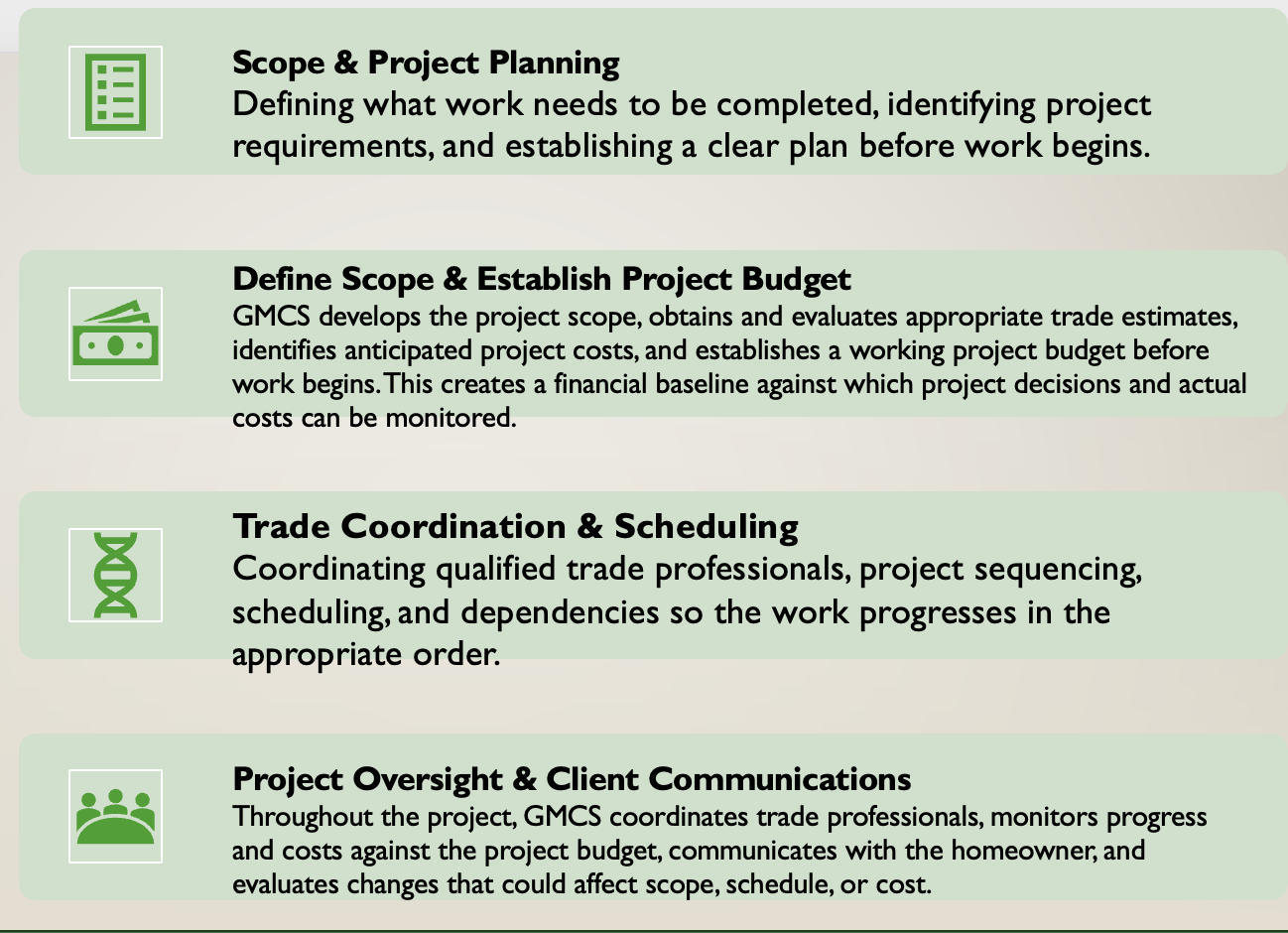
From defining the scope of work and evaluating estimates to coordinating qualified trade professionals, managing the project budget, monitoring schedules, and overseeing project progress, GMCS provides structure and accountability from planning through completion.

The goal is simple: a well-defined project, the right people doing the right work, and a homeowner who doesn't have to manage every moving piece alone.
What GMCS Manages
Bringing Structure to the Moving Pieces
A residential project involves more than hiring someone to perform the work. Scope, trade costs, materials, scheduling, sequencing, and unexpected changes are interconnected—and decisions made in one area can affect both the project and its budget.
GMCS serves as the general contractor and project manager, providing centralized oversight of the work, the qualified trade professionals involved, and the financial components of the project.
Project Management Matters
Because Small Details Can Become Expensive Problems
When several trades are involved, one decision can affect another. Plumbing may need to happen before walls are closed. Electrical work may need to be coordinated before finishes are installed. Carpentry repairs may need to happen before gutters or other exterior components can be completed.
Without coordination, projects can experience unnecessary delays, duplicated work, unexpected costs, and confusion about who is responsible for what.
GMCS provides a central point of coordination—helping keep the scope, trades, costs, scheduling, and communication aligned throughout the project.
Project Budget Management
Know Where the Project Dollars Are Going
A project budget shouldn't be something you discover after the work is underway.
GMCS approaches project costs with the same emphasis on clarity, structure, and informed decision-making that guides every project. Before work begins, estimates and anticipated costs are evaluated to help establish a realistic project budget. As the project progresses, costs are monitored against that budget so homeowners have greater visibility into how project dollars are being used.
When changes, unforeseen conditions, or additional work could affect the budget, those financial implications should be understood before decisions are made whenever reasonably possible.
The objective isn't simply to spend less. It's to manage the available project dollars intentionally while balancing scope, quality, priorities, and unforeseen needs
Structure allows income, expenses, and priorities to work together intentionally instead of reacting to financial demands as they arise. This stage focuses on creating practical systems that help you manage money with consistency and purpose.
LICENSED. STRUCTURED. ACCOUNTABLE.
Gray's Matter Consulting Services provides residential contracting services under Karen Munson-Gray's Tennessee Limited Residential Contractor (BC-A/r) license.
GMCS manages residential projects within its licensed scope and coordinates qualified trade professionals appropriate to the work being performed.
Have a Residential Project in Mind?
Every project begins with understanding the scope. Contact Gray's Matter Consulting Services to discuss your project needs and determine whether GMCS is the right fit for your project.